

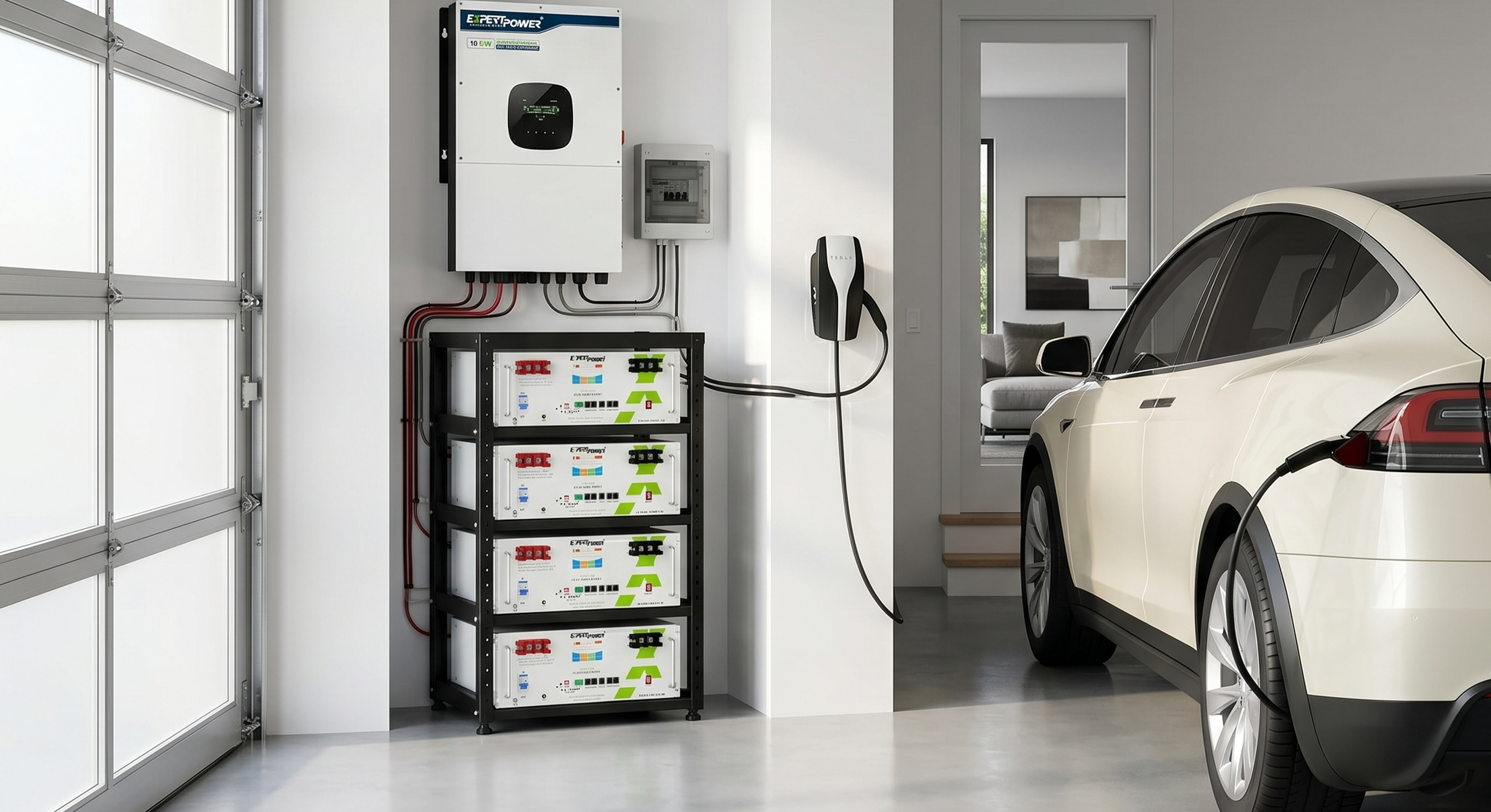


Electric vehicles (EVs) are essentially massive batteries on wheels. While most people see them only as transportation, they are increasingly being viewed as a critical component of a resilient home energy ecosystem. With the right hardware, your car can keep your lights on, your food cold, and your devices charged during a grid failure.
The Evolution of Backup Power: V2H and V2L
The concept of using an EV to power a home is often referred to as Vehicle-to-Home (V2H) or Vehicle-to-Load (V2L).
- V2L (Vehicle-to-Load): Allows you to plug appliances directly into outlets on the vehicle.
- V2H (Vehicle-to-Home): Integrates the vehicle into your home’s main electrical panel to power entire circuits.
Designing a Resilient System
To turn your EV’s energy into usable home power, you need a robust interface. Relying solely on the car can be risky; if you need to drive during an emergency, you’ll want a stationary buffer to keep the house running.
1. The Stationary Buffer (The "House Battery")
A stationary battery bank acts as the heartbeat of your backup system. While your EV provides the "bulk" energy, a rackmount LiFePO4 battery ensures that your home has a constant, stable power source even when the car is disconnected or being used for a supply run.
48V 100Ah Semi-Solid State LiFePO4 Battery
Semi-solid state technology offers higher energy density and improved safety over traditional lithium options.
2. The Brain: Hybrid Solar Inverters
An inverter is necessary to convert the DC power from your batteries (and your EV) into the AC power your home appliances use. A hybrid inverter is particularly useful because it can manage power from multiple sources: the grid, solar panels, and your battery bank.
48V 10kW Hybrid Solar Inverter
Capable of handling heavy loads like well pumps or air conditioners, making it the perfect "brain" for a comprehensive backup setup.
3. Bridging the EV to the Battery Bank
If your EV supports V2L, you can utilize its onboard AC outlets to "refuel" your home’s stationary battery bank during an extended outage. By connecting a high-efficiency charger to the EV’s outlet and then to your battery bank, you create a continuous loop of power.
ExpertPower 48V 10A Charger
Enables trickle-charging of your stationary 48V system directly from the EV’s power output, ensuring your home storage stays topped off.
Why Use a Hybrid Approach?
Integrating an EV with a stationary system offers three major advantages:
- Mobility: You can still use your car without losing power to your home.
- Scalability: You can easily add more rackmount batteries to increase your reserve capacity.
- Battery Longevity: Spreading the discharge load between your car and a dedicated LiFePO4 bank reduces wear on your vehicle’s expensive internal battery.
Ready to Build Your Backup System?
Explore our full range of LiFePO4 solutions and inverters to secure your home's energy future.
ExpertPower Large Engergy Solutions