



One of the most widespread myths surrounding LiFePO4 batteries is that they simply stop working when the weather turns cold. Whether you are late-fall overlanding, winter camping in an RV, maintaining an off-grid cabin, or powering cold-climate communications, temperature concerns often cause hesitation.
The reality is more straightforward: LiFePO4 batteries discharge reliably in sub-freezing temperatures, but charging them below freezing requires proper management. Understanding the physics behind low-temperature charging—and pairing your setup with smart technologies like internal self-heating—ensures year-round power without risking cell degradation.
The Critical Distinction: Discharging vs. Charging
Before designing your cold-weather power system, it is vital to separate the two directions of current flow:
- Discharging (Supplying Power): Safe down to roughly -4°F (-20°C). You can run lights, power inverters, and operate diesel heaters in freezing weather without harming the cells. Internal resistance increases slightly, which may cause a minor voltage drop under heavy draw, but no permanent physical damage occurs.
- Charging (Receiving Power): Restricted below 32°F (0°C) on standard cells. Forcing high charging current into frozen lithium cells triggers an irreversible chemical failure mode known as lithium plating.
The Physics of Lithium Plating
During normal charging above 32°F, lithium ions move freely through the electrolyte and insert cleanly between the graphite layers of the anode—a process called intercalation.
When the internal cell temperature plummets below freezing, the electrolyte thickens and the graphite matrix contracts. If a charge current is forced through anyway, the ions cannot penetrate the anode quickly enough. Instead, they deposit onto the anode’s surface as solid, metallic lithium.
This plated lithium permanently robs the battery of usable capacity and can produce microscopic, needle-like structures called dendrites, which pose an internal short-circuit risk over time.
How the BMS Protects the Bank
An Integrated Battery Management system monitors internal cell temperatures. When core temperatures hit freezing, the BMS opens its charge circuit, preventing incoming current from solar panels or shore chargers while continuing to allow outbound power for critical loads.
Four Proven Cold-Weather Solutions
Modern off-grid installations use these practical strategies to maintain seamless charging throughout freezing conditions:
1. Self-Heating LiFePO4 Batteries (The Turnkey Choice)
The most seamless way to tackle sub-freezing conditions is using purpose-built self-heating batteries from our 12V Smart Self-Heating LiFePO4 Battery lineup. These units incorporate integrated, low-draw thermal heating pads controlled directly by the BMS.
When an incoming charge current (from solar, an alternator, or shore power) is detected while temperatures are below 32°F (0°C), the BMS automatically diverts that incoming energy into the heating elements rather than into the cells. Once the core temperature rises safely above 41°F (5°C), the BMS switches seamlessly from heating mode to normal charging mode. No manual switches, external controllers, or user intervention required.
2. Conditioned Interior Placement
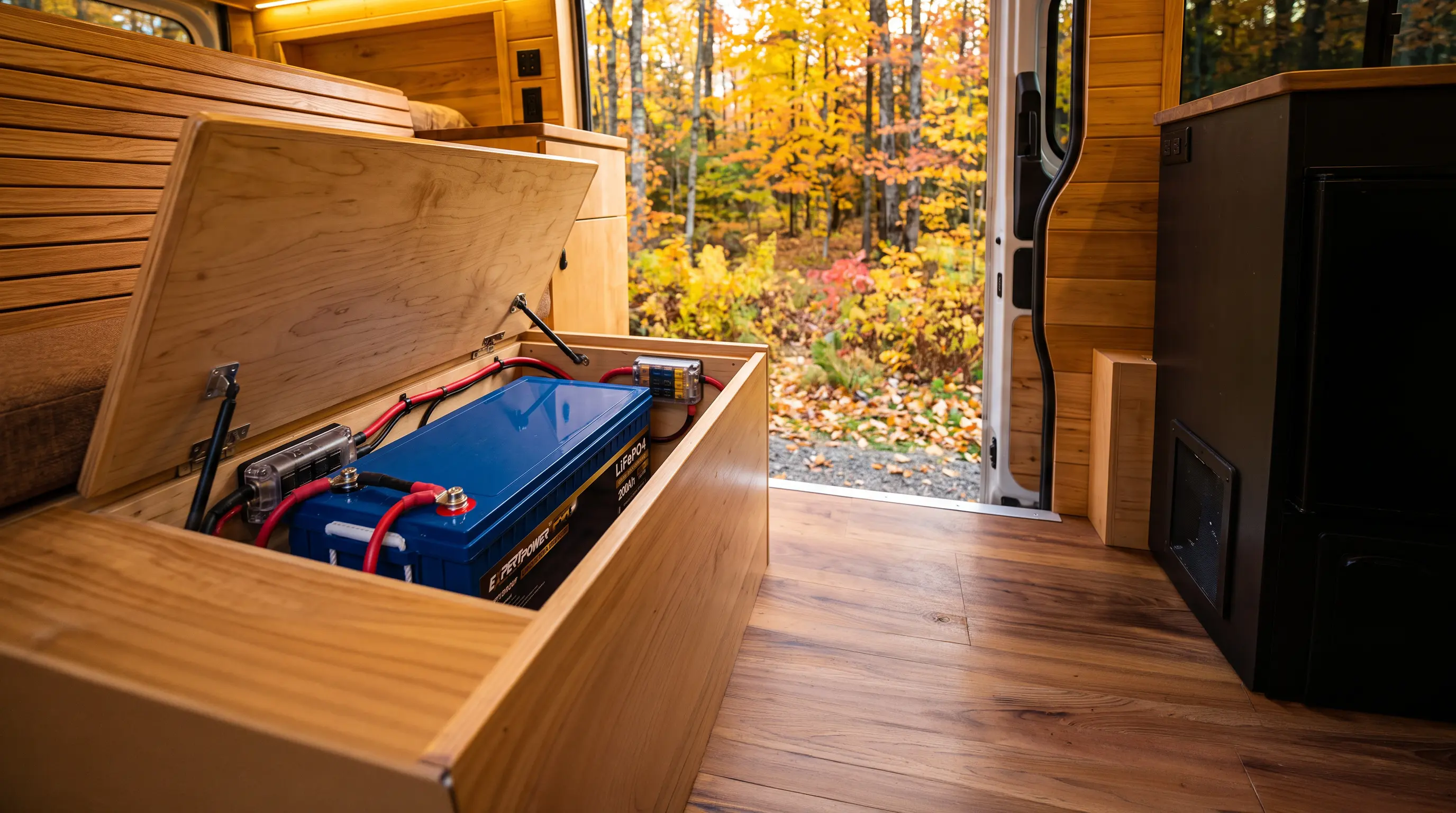
Unlike traditional Sealed Lead Acid Batteries, sealed lithium batteries emit zero toxic fumes, acid mist, or hydrogen gas during use. They can be safely installed inside living spaces—under a bed frame, beneath a dinette bench, or inside an interior utility cabinet. If your camper or cabin is heated for human comfort, your battery bank stays well within safe charging temperatures.
3. Solar Controller Temperature Probes
For added protection, connect an external temperature probe from your MPPT solar charge controller directly to the battery's negative terminal. You can set the controller's low-temperature cutoff to 32°F, stopping charge current at the source before it ever trips the internal BMS safety switches.
4. Thermostatically Controlled Enclosures
If batteries must remain in an unconditioned exterior compartment, installing 12V heating pads paired with a snap-disc thermostat (turning on at 35°F and off at 45°F) inside a rigid-foam insulated battery box will keep the bank at safe operational temperatures with minimal draw.
Upgrade to All-Season Lithium Power
Don’t let falling temperatures compromise your power system. Explore our complete selection of standard and self-heating lithium batteries engineered for dependable four-season performance.
Explore ExpertPower LiFePO4 Batteries