

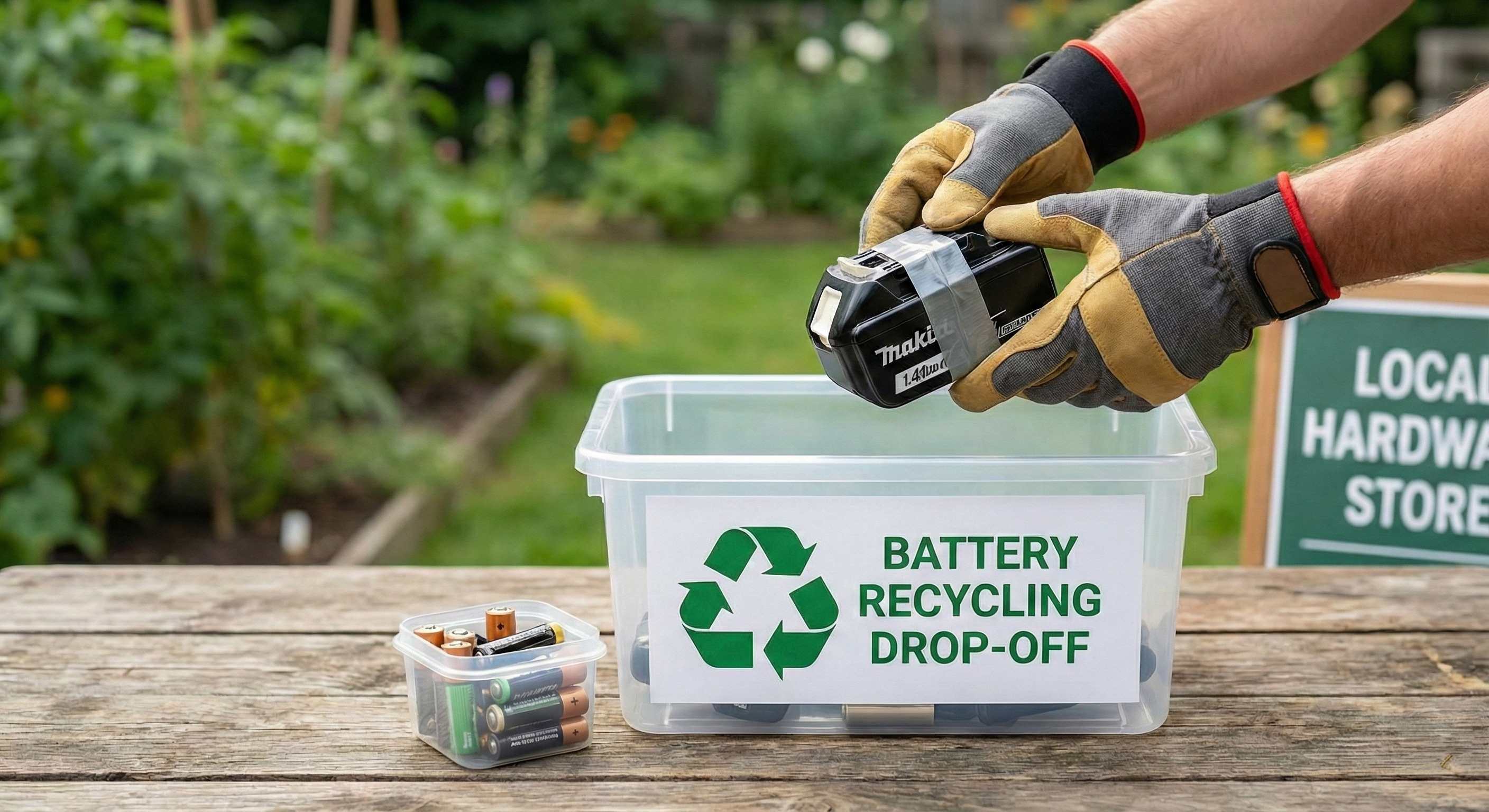


Batteries are feats of modern engineering. They are packed with incredible energy and valuable minerals that power everything from our handheld drones to our off-grid solar cabins. But when that energy is depleted and the battery reaches the end of its life, it doesn't belong in the trash can.

It is a common misconception that tossing a battery in the bin is harmless. In reality, "landfilling" batteries poses significant risks. As casings corrode, chemicals leach into the soil, contaminating groundwater. Even worse, lithium-based batteries can spark "zombie fires" in garbage trucks and waste facilities if crushed or punctured.
This guide is your simple roadmap to identifying, prepping, and dropping off your old batteries responsibly.
Step 1: Identify Your Battery Type
Not all batteries are created equal. Before you toss them in a box, group them by chemistry. This makes the recycling process much smoother for the facility.
- Lithium-Ion (Li-ion/LiPo): These are the workhorses of the modern age. You will find them in your drones, modern cordless power tools, laptops, and smartphones. They are high-energy and require careful handling.
- Lead-Acid: These are large, heavy, blocky batteries. You likely have these if you are running an older solar setup, a UPS backup, or maintaining a vehicle/motorcycle.
- LiFePO4 (Lithium Iron Phosphate): These are likely the high-end cells in your upgraded solar kits or modern RV setups. They are safer than standard Li-ion but still require recycling.
- Alkaline: These are your standard AA, AAA, C, and D household batteries used in remotes and flashlights. Note: While some municipalities allow these in the trash, recycling them is always the greener choice.
Step 2: Preparing Batteries for Disposal
Once sorted, you must "safety-proof" the batteries for transport.
The Safety First Rule: Tape the Terminals
For Lithium and Lead-Acid batteries, exposed metal terminals can be dangerous. If the positive and negative terminals touch metal (or each other) during the drive to the recycling center, they can short-circuit and cause a fire.

How to prep them:
- Use clear packing tape or non-conductive electrical tape.
- Place a strip of tape over the metal connectors/terminals.
- Ensure the tape is secure but does not hide the battery label (recyclers need to read what type it is).
Bagging
For an extra layer of safety, place individual taped batteries in separate clear plastic bags (like Ziploc bags). This prevents any chance of contact.
If a battery is swollen (looking like a puffy pillow), hissing, leaking, or hot to the touch, do not attempt to tape or transport it normally. This is a fire hazard. Place it in a bucket of sand or a fire-safe container and contact your local hazardous waste center immediately for specific instructions.
Step 3: Where to Go (The "Where" List)
You have your batteries sorted, taped, and bagged. Now, where do you take them?
- Retail Partners: Many "Big Box" hardware stores (like Home Depot or Lowes) and electronics retailers (like Best Buy) feature free drop-off kiosks near the entrance. These are usually specifically for rechargeable power tool and consumer electronics batteries.
- Specialized Recyclers: Organizations like Call2Recycle (operating in the US and Canada) are the gold standard. Their websites offer easy locators—just type in your zip code to find the nearest drop-off point.
- Local Hazardous Waste Events: For those heavy Lead-Acid solar batteries that won't fit in a retail kiosk, check your municipality's schedule. Most cities host "Hazardous Waste Recycle Days" specifically for large items.
Why Recycling is a "Win-Win"
Recycling isn't just about avoiding a fire in a landfill; it is about fueling the future.

1. Recovering Raw Materials
Batteries are dense with critical minerals like cobalt, lithium, and nickel. Through "urban mining" (recycling), these materials can be extracted and purified to make new batteries. This significantly reduces the need for environmentally invasive mining operations.
2. The Circular Economy
By recycling your old power tool battery replacements, you are helping feed the supply chain. Your old drill battery could essentially become part of the next generation of high-performance tools.
Transitioning to New Tech
Taking out the trash is also the perfect opportunity to evaluate your power needs.
If you are hauling heavy Lead-Acid batteries to the recycler, it might be a sign that it is time to upgrade. Technology has moved on. Transitioning to LiFePO4 technology for your solar bank offers a massive jump in efficiency, safety, and lifespan compared to older chemistries.
Out with the old, in with the new.
Once you’ve cleared out your old batteries, browse our shop for the latest in high-efficiency, long-lasting power solutions!
Browse Power Solutions