

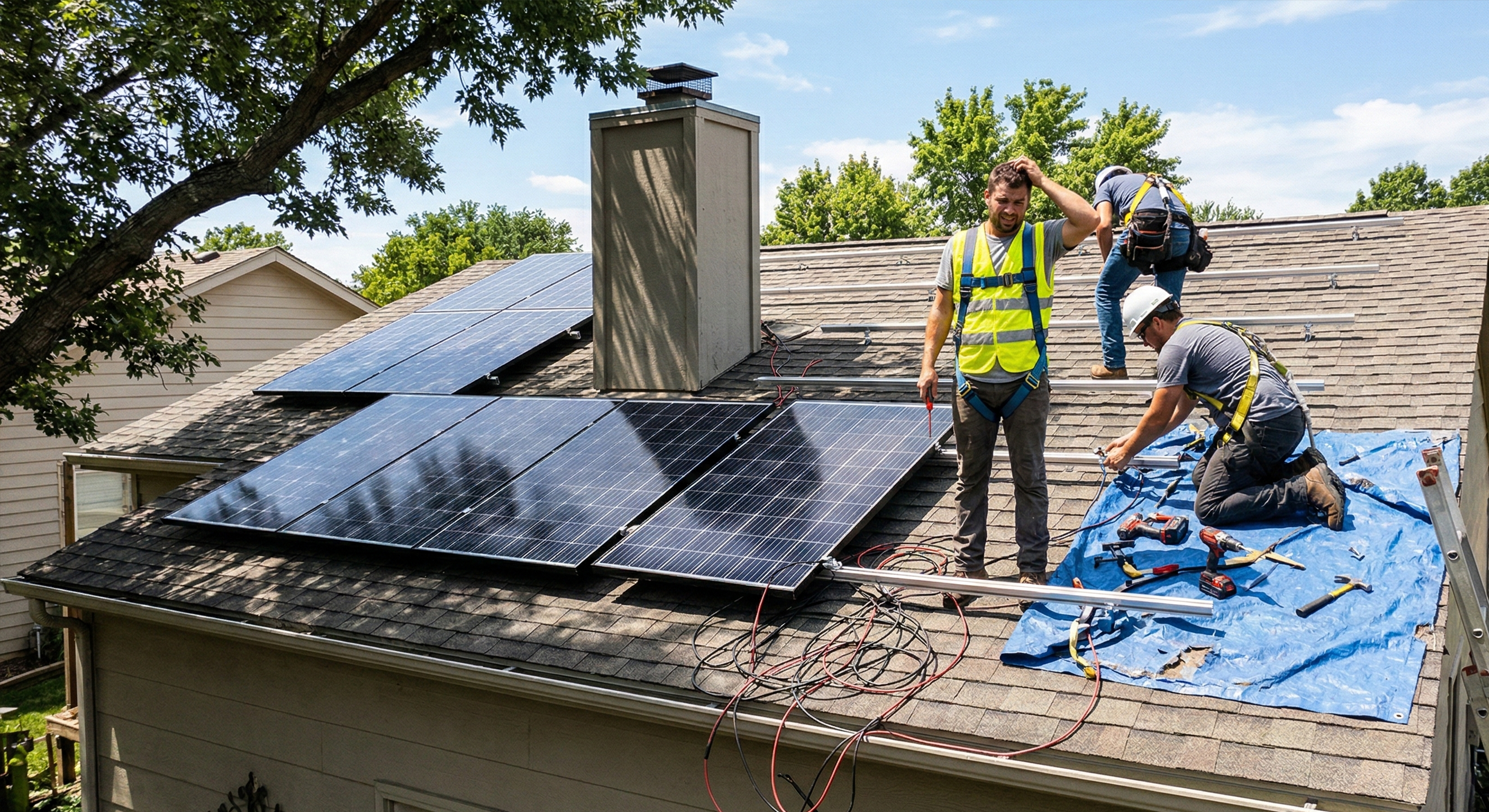


There is a specific kind of dopamine hit that czomes with unboxing a brand-new solar kit. You see the sleek blue cells, the heavy-duty batteries, and the promise of "free" energy from the sun. But that excitement can vanish pretty quickly when you flip the switch and... nothing happens. Or worse, you smell something burning.
Solar energy isn't quite as "plug-and-play" as a kitchen toaster. It’s a precision electrical system that requires a bit of respect and a lot of planning. Whether you're powering a van, a tiny home, or just a backyard shed, avoiding these five common hurdles will save you money, time, and a whole lot of frustration.
1. Incorrect Wire Sizing (The "Garden Hose" Analogy)
Think of your wiring like a garden hose. If you try to force the water volume of a fire hydrant through a narrow straw, you’re going to have a bad time.
- The Error: Using wires that are too thin for the amount of current (amps) being pulled.
- The Risk: When wires are too small, you experience voltage drop, meaning power literally disappears as heat. In extreme cases, those thin wires can melt or even start a fire.
- The Fix: Always consult a wire gauge chart (AWG). Remember: the further the distance between your panels and your battery, the thicker the cable needs to be to overcome resistance.
2. Neglecting the "Shade Factor"
You might think a "mostly sunny" spot on your roof is good enough. Unfortunately, solar panels are remarkably sensitive to shadows.
- The Error: Mounting panels where a chimney, tree branch, or even a vent pipe casts a small shadow.
- The Technical Bit: Most solar panels are wired in "strings." If you shade even 10% of one panel, it can create a bottleneck that slashes the power output of the entire array.
- The Fix: Don't guess—verify. Use a "Sun Path" app on your smartphone or physically observe your mounting site at different times of the day before you drill a single hole.
3. Improper Battery Connection Sequences
- The Error: Plugging your solar panels into the charge controller first.
- The Risk: Many smart charge controllers need to "wake up" and sense the battery voltage (12V, 24V, etc.) to calibrate. Blasting them with raw solar power first can fry the internal logic.
- The Fix: Memorize this sequence: Battery → Controller → Panels. When taking it apart, do the exact opposite.
4. Mixing and Matching Incompatible Parts
- The Error: Adding a 24V panel to a 12V system, or mixing a brand-new Lithium battery with an old Lead-Acid one.
- The Risk: Your system will always perform at the level of its weakest link. Mixing old and new batteries will lead to the old battery "draining" the life out of the new one.
- The Fix: Keep your components consistent. Ensure all batteries in a bank are the same age, brand, and chemistry.
5. Skipping Fuses and Circuit Breakers
- The Error: Assuming a small DIY setup doesn't need professional-grade protection.
- The Risk: A simple accidental short circuit—like a dropped wrench hitting two terminals—can dump hundreds of amps instantly. Without a fuse, your hardware could be ruined in a flash.
- The Fix: Treat fuses as cheap insurance. Map out protection points between your panels and the controller, and between the battery and the inverter.
The Bottom Line
Solar is an incredibly rewarding investment that provides independence and sustainability, but it demands a "measure twice, cut once" mentality. When in doubt, always refer to your component manuals or reach out to a professional.