

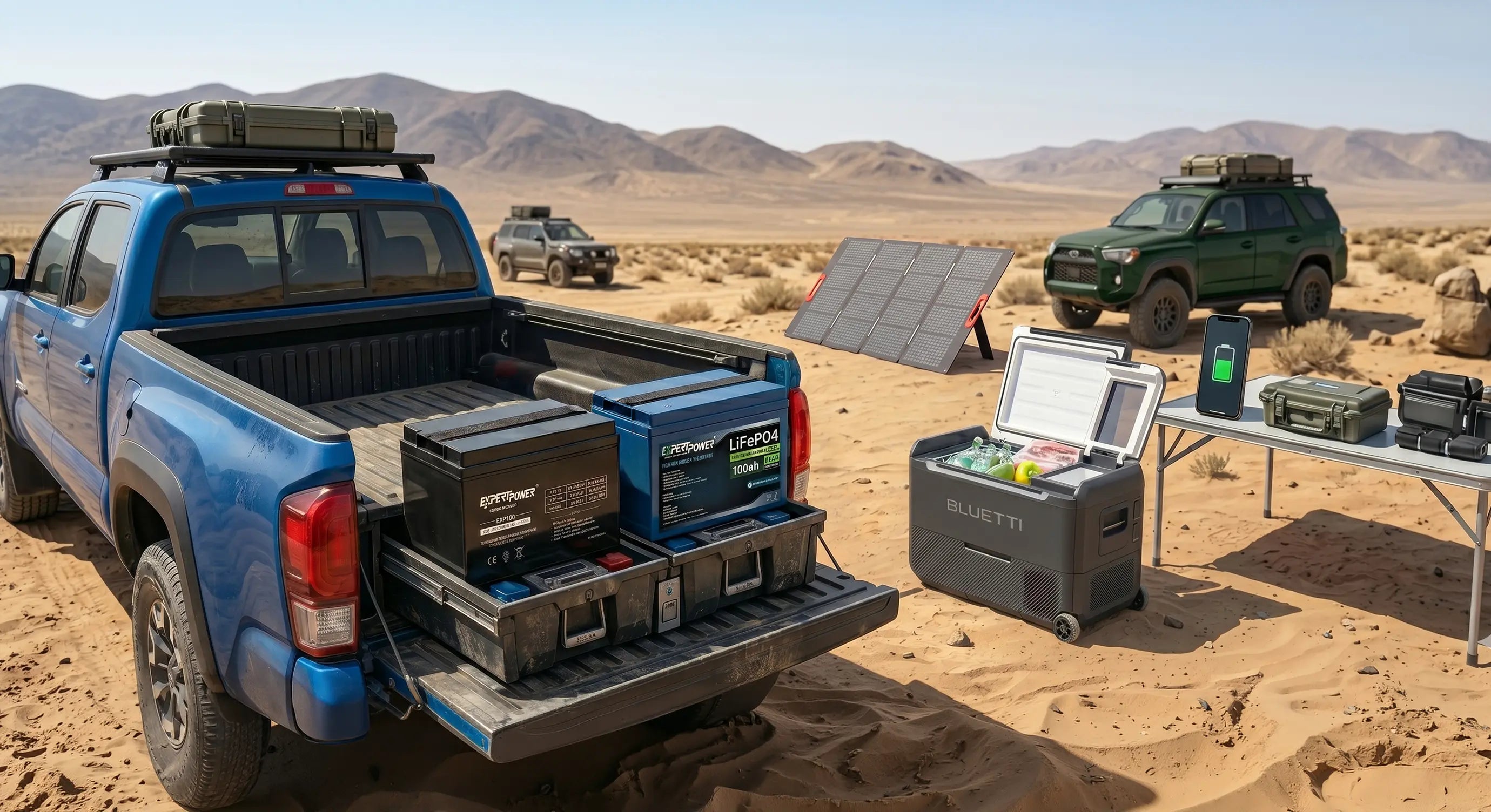


We’ve all been there. You arrive at a breathtaking, remote campsite after hours on the trail. You’re hungry, tired, and ready for a rewarding meal. You open your high-end cooler only to find the classic overland nightmare: a soggy, floating mass of sandwich bread, lukewarm deli meat, and a carton of eggs bobbing in a pool of murky, melted ice.
Overlanding and micro-camping have undergone a massive cultural shift. We’ve moved away from the old-school, "survive the elements" mentality and embraced optimized, high-efficiency comfort. Thanks to compact, smart technology, you don't have to rough it anymore.
While a premium, roto-molded cooler looks rugged strapped to your roof rack, it actually comes with limitations. Upgrading to a 12V compressor fridge/freezer paired with a reliable auxiliary battery bank is cleaner, more efficient, and incredibly liberating. Here is why it’s time to leave the ice age behind.
The True Cost of Ice (Why Coolers Lose the Battle)
Coolers seem like the simple choice upfront, but they come with heavy, hidden taxes on your wallet, space, and freedom.
- The Hidden "Ice Tax": Buying two bags of ice at $5 to $10 a pop every few days doesn't sound like much. But if you camp frequently, you can easily spend over $150 a season just on frozen water that literally vanishes.
- Space Theft: Ice is a terrible roommate. It takes up 30% to 40% of your cooler’s internal volume. That means a hefty 45-quart cooler only gives you about 30 quarts of actual food storage. You're hauling a massive plastic box just to transport ice.
- Logistical Stress: Relying on ice shackles you to civilization. Your route planning becomes dictated by gas stations and grocery stores rather than the trail. It kills the magic of true off-grid exploration.
- The Hygiene Factor: When ice melts, cross-contamination runs wild. Raw chicken juices mixing with your drinking water? No thanks. With a 12V fridge, your meat stays dry, your veggies stay crisp, and your cheese doesn't turn into a spongy mess.
How 12V Fridge/Freezers Actually Work
To understand why these appliances are game-changers, we need to look at the technology inside them.
Thermoelectric vs. Compressor Fridges
Don't confuse a true 12V overland fridge with those cheap $50 thermoelectric "coolers" sold at truck stops. Thermoelectric units can only lower the temperature about 30°F below the ambient air. If your truck interior hits 95°F on a summer day, your milk is sitting at a dangerous 65°F.
True 12V portable fridges utilize a variable-speed compressor—the exact same technology found in your household refrigerator. They don't care how hot it gets inside your vehicle; they actively pump heat out and pull minimal power to do it.
Temperature Precision
With a digital thermostat, you get absolute control. Want to keep drinks at a perfectly frosty 34°F? Done. Need to store medicine safely? Easy. Want to shock your campmates by pulling out rock-solid ice cream in the middle of the Mojave Desert? Just dial it down to 0°F.
The Math: Sizing the Power for a 12V Fridge
The biggest hesitation campers have about switching to a 12V fridge is power anxiety: "Won't it drain my battery overnight?"
The short answer is no—if you use the right battery setup. A portable fridge doesn’t run continuously. Once it reaches its target temperature, the compressor cycles off, and the insulated walls keep it cool. On average, a mid-sized 12V fridge consumes roughly 1.0 to 1.5 Amp-hours (Ah) per hour, which translates to about 25 to 36 Ah per 24-hour period (depending on outside temperatures).
To support that draw, you need a dedicated house battery. Depending on your budget, travel style, and power needs, there are two excellent ways to go.
Choosing Your Powerhouse: SLA vs. LiFePO4
| Feature | 100Ah Sealed Lead Acid (SLA) | 100Ah ExpertPower LiFePO4 |
|---|---|---|
| Primary Advantage | Highly Budget-Friendly Upfront | Maximum Energy Density & Lifespan |
| Usable Capacity | ~50 Ah (Safe 50% Depth of Discharge) | ~100 Ah (Safe 100% Full Discharge) |
| Days of Fridge Power | ~1.5 Days (No charging) | ~3 to 4 Days (No charging) |
| Weight | ~60–70 lbs (Heavy, stable base) | ~23 lbs (Lightweight & portable) |
| Lifespan | 300–500 cycles | 2,000–5,000 cycles |
Both battery types have a valuable place in an overlanding build.
If you are building your first camp rig or need an affordable, time-tested solution, the ExpertPower 12V 100Ah SLA is an excellent entry point. It provides a highly reliable, heavy-duty foundation that easily covers weekend trips, especially if you plan to charge it via your vehicle daily.
On the other hand, if you prioritize weight savings, want to stay stationary at basecamp for days at a time, or look at your gear as a 10-year investment, upgrading to lithium delivers premium depth-of-discharge and ultimate weight reduction.
Setting Up Your Micro-Camping Power System
Building an off-grid power setup is simpler than it looks. It boils down to three core components:
- 1. The Battery: A rugged deep-cycle battery acts as your camp's power plant, sitting securely in your trunk or truck bed.
-
2. The Recharge Source: To stay off-grid indefinitely, you need a way to top up your battery.
- Option A: DC-to-DC Charging: This system links your vehicle's alternator to your house battery, charging it safely while you drive between campsites. This is particularly perfect for SLA batteries, keeping them topped up and healthy.
- Option B: Portable Solar: When setting up a basecamp for a few days, plugging in a 100W–200W suitcase solar panel will easily keep pace with your fridge's daily power draw.
- 3. The Smart Monitoring Edge: For those who want maximum insight into their power management, smart premium options are available. By utilizing a battery from the ExpertPower Bluetooth-Enabled Collection, you can open an app on your phone right from your camp chair to monitor your voltage, capacity, and runtime in real time.
Pro-Tips for Maximizing 12V Fridge Efficiency
To get the absolute most out of your battery and fridge setup, follow these overland insider rules:
- Pre-chill Everything: Plug your fridge into a home wall outlet the night before your trip and load it with already-cold food and drinks. Your auxiliary battery shouldn't have to do the heavy lifting of cooling warm groceries down from room temperature.
- Keep it Full: Air loses its cold quickly when the lid is opened; solid objects don't. A packed fridge acts as a thermal mass that helps maintain steady temperatures, meaning the compressor has to cycle on less frequently.
- Ventilation is Key: Compressors need to breathe to exhaust heat. Avoid burying your fridge’s vents under sleeping bags, heavy canvas, or tightly packed storage bins.
Conclusion: Upgrade Your Camp Game
Ditching the ice isn't just a luxury upgrade; it’s a total structural shift in how you experience the outdoors. By moving to a 12V compressor fridge and a reliable power system, you unlock more storage space, eliminate food waste, and gain true off-grid independence.
Ready to cut the cord on the ice machine and elevate your setup? Whether you want a reliable, cost-effective starter setup with the ExpertPower 12V 100Ah SLA Battery or want to explore advanced monitoring with the ExpertPower 12V 100Ah LiFePO4 Bluetooth Battery, ExpertPower has the perfect energy solution for your next overlanding adventure. Explore our full Bluetooth Collection to learn more.