

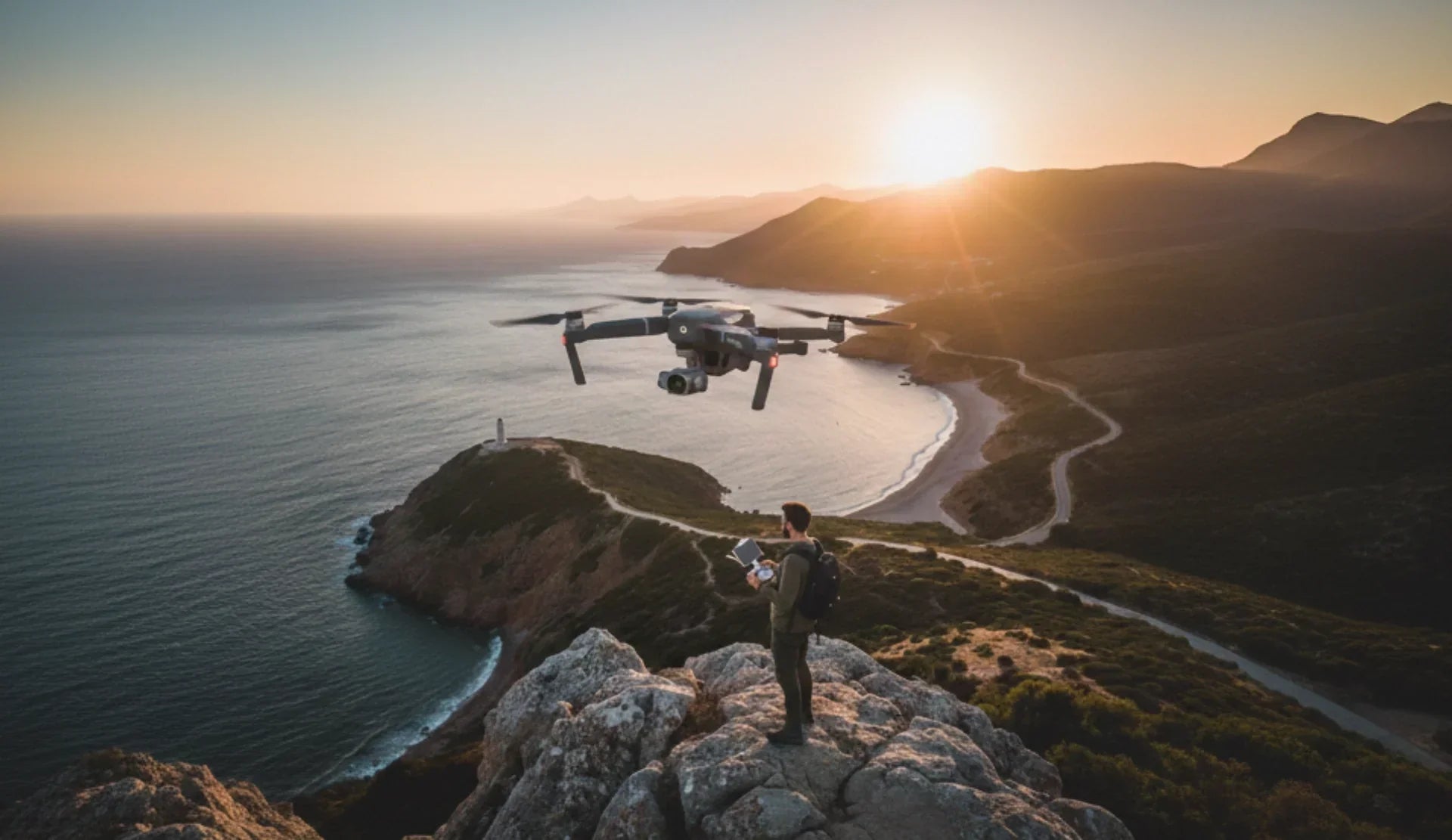


You have the ultimate aerial tool—now, how do you move beyond simple snapshots to capturing breathtaking, professional-quality photos? This guide breaks down the essential camera settings and simple flight techniques that every beginner drone pilot needs to know. Remember, great photos start with reliable flight, which means having good drone batteries and stable gimbals.
Essential Camera Settings: The Exposure Triangle
Understanding these three settings is fundamental to any photography, including drone photography.
Aperture (f/stop)
For most consumer drones, the aperture is fixed (e.g., f/2.8). If your drone has an adjustable lens, a higher f-number (like f/8) will keep more of your scene in focus. However, if it's fixed, don't worry about this setting too much.
Shutter Speed: The Key to Sharpness
This is where you'll make some crucial decisions. To keep your photos sharp and avoid motion blur, a good rule of thumb is to set your shutter speed to at least double your frame rate when shooting video (e.g., for 30fps video, a shutter speed of 1/60th of a second or faster). For still photos, aim for 1/250 of a second or faster to freeze any motion.
ISO (Light Sensitivity)
Always aim to keep your ISO as low as possible, ideally ISO 100. This prevents digital "noise" or graininess, which can degrade the quality of your images. Only increase ISO in very low-light conditions.
Flight Techniques for Composition
Beyond technical settings, how you fly your drone dramatically impacts your photo's composition.
Rule of Thirds
Enable the grid overlay on your drone's camera app. This simple grid will help you place your main subject (like a horizon, a road, or a river) along the grid lines or at their intersections. This creates a more balanced and dynamic photo than simply centering everything.

Using the grid helps align subjects for a more compelling visual.
Leading Lines
Look for natural elements like roads, coastlines, rivers, or even patterns in fields. Fly your drone so these elements lead the viewer's eye from the foreground deep into your photo, creating depth and interest.
The Birds-Eye View (Top Down)
This technique is unique to drones. Fly straight up to a good altitude and point your camera directly down (90°). This can create stunning, abstract patterns from above—think salt flats, swimming pools, or agricultural fields.

The (90°) top-down perspective reveals stunning, abstract patterns.
Essential Pre-Flight and Post-Flight Tips
To ensure safety and the best possible results, always follow these critical steps.
Shoot in RAW (If possible)
If your drone allows it, always shoot in RAW format. RAW files contain significantly more image data than JPEGs, giving you far greater flexibility to correct exposure, adjust colors, and recover details in post-editing software. This can turn a good photo into a great one!
Check Your Batteries (Safety First!)
This is non-negotiable. Always fly with fully charged drone batteries. Know your drone's maximum safe range and always reserve enough power to return home safely, accounting for wind and other environmental factors.
Shop High-Performance Drone Batteries Now!Master the Environment
- Light: The best light for drone photography is often during the **Golden Hour**—the hour after sunrise and the hour before sunset. This provides soft, diffused light, long shadows, and warm colors that can make your landscapes glow.
- Wind: Always check the wind speed before flying. High winds not only make stable shots incredibly difficult but also drain your drone's battery much faster.
Conclusion
Practice makes perfect! Experiment with your exposure settings and combine them with classic composition rules like the Rule of Thirds and Leading Lines. The sky truly is the limit for your creativity when you master these essential drone photography techniques.
Ready to capture your next masterpiece? Make sure your gear is up to the task with reliable drone batteries and professional-grade ND filters and accessories from our shop!
Shop Drone Accessories Now!