

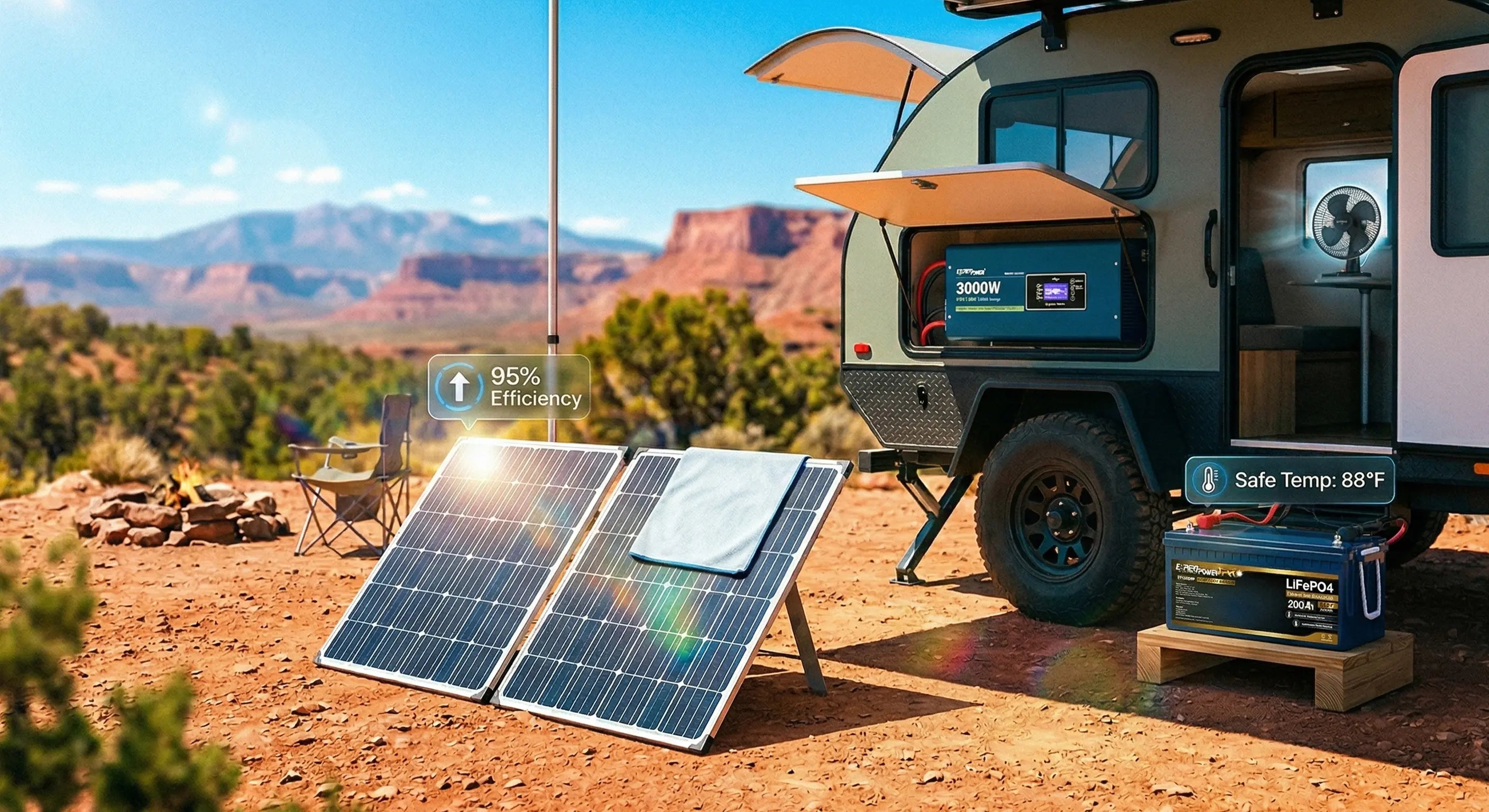


I. Beat the Heat: Battery Temperature Management
While LiFePO4 handles heat better than lead-acid, extreme temperatures (above 113°F or 45°C) can trigger the Battery Management System (BMS) to slow down charging for safety.
- Airflow is King: Keep batteries in a ventilated area. Avoid sealed plastic bins which trap heat.
- Off the Floor: In vans or trailers, keep batteries off metal surfaces that soak up road heat.
- The Shade Rule: If your portable power station is outside, keep it under a table or a reflective tarp.
II. Maximizing "Solar Harvest"
In summer, the sun is higher in the sky. To get the most out of your panels, you need to adjust your strategy.
Angle of Incidence
Adjust your panel tilt to be flatter than in winter. When the sun is directly overhead, a horizontal or near-horizontal panel captures the most direct energy.
The "Dust Factor"
Summer trails mean dust and pollen. A 10% layer of dust can cause a 30% drop in power. Use a microfiber cloth and plain water to keep panels crystal clear.
Shade Awareness
Even a small leaf or shadow from a roof rack covering one corner of a panel can significantly drop the output of the entire string.
III. Summer Appliance Strategy
Efficiency isn't just about how you get power, but how you spend it.
The Portable Fridge
The #1 summer accessory. For maximum efficiency, pre-chill your fridge at home on AC power before switching to the battery for your trip.
DC Fans vs. AC Air Conditioning
Using 12V fans is the most sustainable way to stay cool. AC units drain the bank in hours, while DC fans can run for days on a single charge.
Phantom Draws
Turn off inverters when not in use. High ambient temperatures cause inverter fans to run more frequently, consuming "hidden" power.